
Why History Should Matter to Washington
Elena Tiedens July 9, 2026
Being young in Washington is to be surrounded by a sea of IR majors. Occasionally you will encounter a political science major. The professionalization of American higher education means that these degrees prepare students impeccably well for the work of Washington, but key disciplinary assumptions underpin their foundational courses – and thus shape foundational thinking in the next generation of policy professionals. I came to the Scoville Fellowship and nuclear policy work by route of history.
Historical assumptions have much to add to the policy conversation. The theories, assumptions, and methodologies of political science contribute significantly to policy, but Scoville – which has long valued historical training in its fellow selection process – has a role in bringing historical assumptions and ways of thinking to Washington.
I studied history in college because I believe that history undergirds the present. At the University of Chicago, I chose to concentrate in energy history because I wanted to understand the construction of the energy-intensive systems that drive the global climate crisis. Slowly, my research turned to the logistics of energy-intensive shipping in the Arctic with a focus on the Russian Arctic.
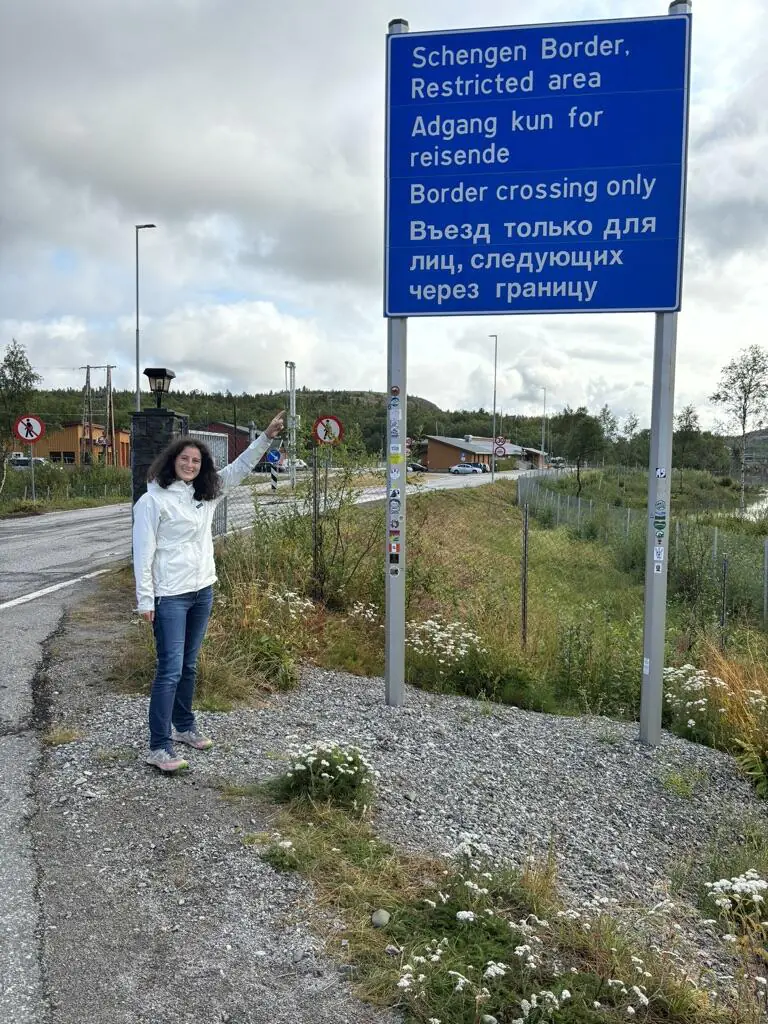
Through the study of nuclear energy flows in the far North, I also learned about the political climate of post-Soviet Russia in the 1990s. I was struck by how the fall of the Soviet Union wasn’t only a moment of economic and social devastation for Russians but was also a moment of incredible possibility, when people reenvisioned the possible uses of nuclear technology and set into motion ambitious plans for nuclear weapons reductions. While I went into my project with a question about energy and technology, I came out with an understanding of the radical openness of states at moments of political transition.
This historical understanding of the state diverges significantly from the perspective of International Relations both in its methodological approach and in its assumptions about institutions, the nation state, and even human nature. In contemporary IR, the nation state is the fundamental unit of analysis. The state enters conflicts and negotiates treaties to advance its interests, and it considers some countries adversaries and others allies based on historical conflict, political orientation, and domestic and international goals. In IR, states have less room to evolve and remake themselves based on historical processes and contingencies.
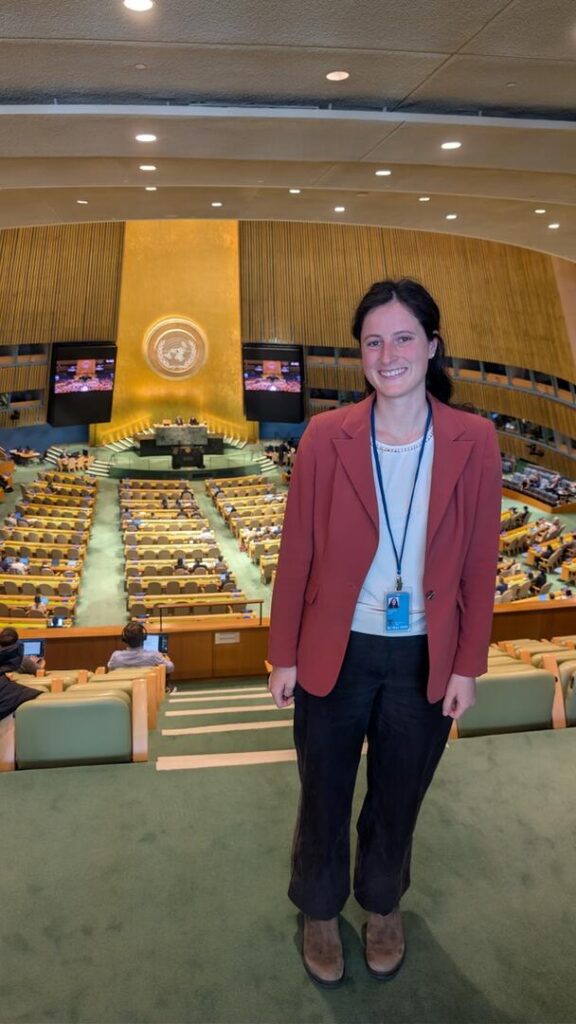
Indeed, there is a good reason for this. States do organize modern political life across the globe, and the period after WWII has seen the rise of a relatively stable world order built upon state sovereignty. As a Scoville Fellow at CSIS’s Project on Nuclear Issues (PONI), I got a firsthand view to the eminence of states within the multilateral world order when I attended the 2026 Nonproliferation Treaty (NPT) Review Conference. I saw how legitimate disagreements between countries prevented the adoption of a consensus document on the maintenance of the treaty. For example, the United States and Iran could not agree on whether Iran should be singled out in the consensus document as a violator of the NPT because of its uranium enrichment activities – or whether these enrichment activities could be seen as in compliance with the treaty.
State agency may be even more evident outside the strictures of the increasingly decaying multilateral international order. During my fellowship year the last remaining strategic arms control agreement between the United States and Russia, New START, expired without a follow-on agreement. As a Scoville Fellow, I got to think about the role of the United States in the international nuclear order in a period where the guardrails are increasingly disappearing. The Scoville Fellowship has been a transformative experience for understanding state activity in an increasingly unstable world.
But historical perspectives remind us that the nation state is not nearly so stable as contemporary IR suggests. As hallmark books in modern history suggest, people have contested and reconstructed the nation state at moments of vast political change. A long look at history demonstrates that states can change radically – and quickly.
Maintaining a historical point of view through my policy work has allowed me to see beyond the constrictions of the current geopolitical moment. The collapse of the Soviet Union, for instance, demonstrates that the course of Russian history was never predetermined. Especially in the 1990s, there were many moments in which Russia could have reinvented itself. Putin’s rise and the reassertion of authoritarianism in Russia was no inevitable reconquest. This recognition — and an openness to the possibility that states can radically transform themselves — could allow nations to remake their relationships with each other, especially over nuclear and non-nuclear technologies.
The current consensus in Washington on arms control, for example, is dim: given China’s historical nuclear buildup and Russia’s war in Ukraine, this is not the time. But a historical perspective could suggest that improved conditions for arms control may, in fact, be on the horizon. As a Scoville Fellow at PONI, I have gotten to contribute to the intellectual work that will lay the groundwork for future arms control when state relationships change – and indeed, these relationships can change rapidly and radically. Arms control thinking should not wait and can seize upon even smaller moments of rupture.
The goal of the Scoville Fellowship is to bring diverse young professionals into the nuclear policy community. For me, it has been incredibly valuable to see how nuclear history compares to the work of policy research.
Elena Tiedens was a Fall 2025 Scoville Fellow at the Center for Strategic and International Studies’ Project on Nuclear Issues.